
Small brands often face a dual challenge: competing for attention in a visually saturated market while operating with constrained marketing budgets and limited production resources. The prevailing wisdom that "content is king" has evolved; now, visually compelling content is often the crown jewel, driving engagement, building trust, and converting prospects. For smaller operations, the key is not to outspend larger competitors, but to outsmart them by leveraging authentic, accessible, and highly shareable visual formats that resonate directly with their target audience. The goal is to maximize impact with minimal overhead, focusing on ideas that are both effective and achievable without a dedicated creative team or a six-figure production budget.
What to Look For in Visual Content Ideas for Small Brands
When evaluating visual content ideas for a small brand, prioritize options that offer a high return on effort and investment. Look for concepts that are:
- Authentic and Relatable: Small brands thrive on connection. Visuals that feel genuine, showcasing real people, processes, or results, build trust more effectively than overly polished, generic stock imagery.
- Cost-Effective to Produce: Opt for ideas that can be executed with existing equipment (smartphones), minimal software, or readily available resources. User-generated content (UGC) is a prime example of a low-cost, high-impact approach.
- Easy to Repurpose: A single visual asset should ideally be adaptable across multiple platforms and formats. A short video clip could yield stills, GIFs, and be used in stories, reels, and email headers.
- Brand-Building: Every visual piece should reinforce your brand's unique identity, values, and messaging. Consistency in style, color, and tone helps establish recognition.
- Engagement-Driven: Visuals should prompt interaction—likes, shares, comments, saves, or clicks. Interactive formats or those that tell a story tend to perform well.
- Action-Oriented: Ultimately, visual content should guide the audience towards a desired action, whether it's learning more, making a purchase, or signing up for a newsletter.
1. User-Generated Content (UGC) Showcases
Leveraging content created by your customers is a powerful strategy for small brands. UGC provides authentic social proof, builds community, and significantly reduces content creation costs. This can include photos of customers using your product, reviews featuring visuals, or testimonials shared on social media. By actively encouraging and curating UGC, small brands can tap into a continuous stream of relatable and trustworthy visual assets that resonate with potential buyers far more than branded marketing materials.
Best for: Brands with an existing customer base, products with visible results (e.g., beauty, fitness, home goods), or services that foster strong community engagement.
Pros:
- High authenticity and credibility, boosting trust among new prospects.
- Significantly lowers content production costs and resource demands.
- Fosters a sense of community and customer loyalty.
- Provides diverse perspectives and use cases for your product/service.
Cons:
- Requires active monitoring and curation to maintain brand consistency and quality.
- May necessitate permission-seeking from users, which can add a step to the process.
- Initial traction can be slow if the brand is very new or has a small following.
Verdict: UGC is an indispensable strategy for small brands seeking to build trust and scale their visual content output without a large budget. Focus on simple calls to action and clear guidelines for submission.
2. Behind-the-Scenes (BTS) Glimpses
Showing the human side of your small brand builds immediate rapport and transparency. BTS content can include photos or short videos of your team at work, the creation process of your product, packaging orders, or even candid moments from your office or workshop. This type of visual content humanizes the brand, making it more approachable and relatable, and allows customers to feel a personal connection to the people and passion behind the product or service.
Best for: Craft-based businesses, service providers, local shops, or any brand where the process or people are a key differentiator.
Pros:
- Builds trust and authenticity by revealing the human element of the brand.
- Creates a stronger emotional connection with the audience.
- Relatively easy and low-cost to produce using a smartphone.
- Offers unique content that competitors cannot easily replicate.
Cons:
- Requires a degree of comfort with sharing internal operations.
- Content might appear less polished if not framed thoughtfully.
- Can be repetitive if not varied with different aspects of the business.
Verdict: BTS content is a direct route to building brand loyalty and demonstrating transparency. Prioritize showing genuine moments over perfect production quality.
3. Infographics and Data Visualizations
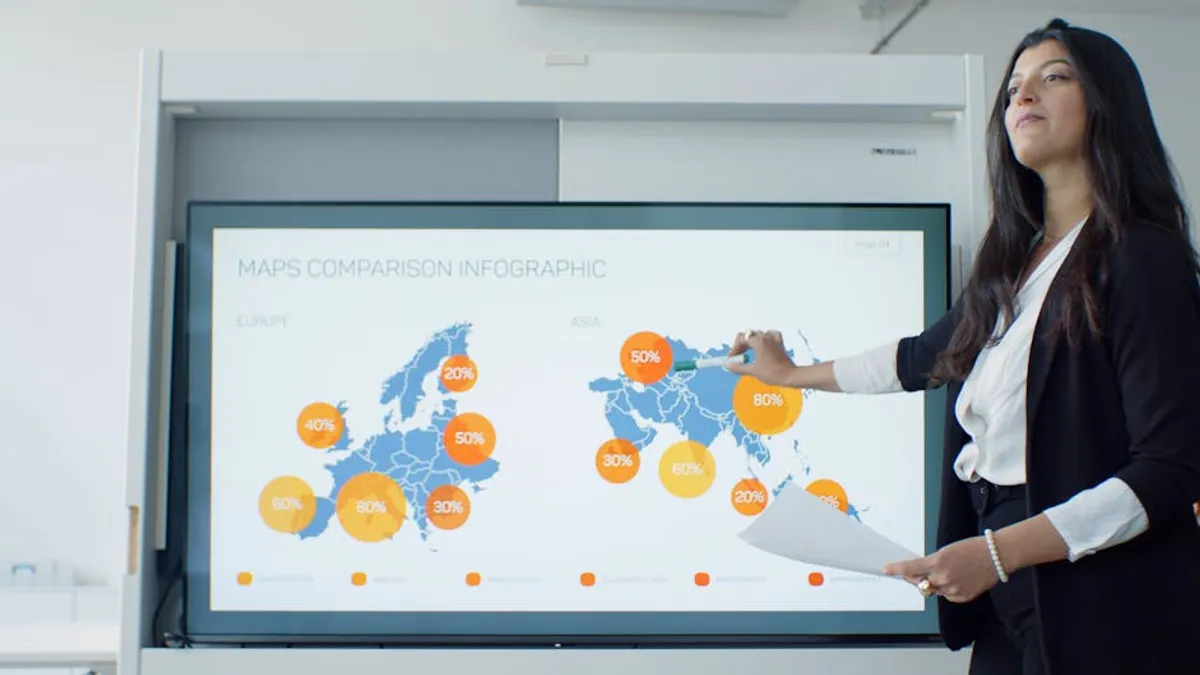
Complex information or compelling statistics can be distilled into easily digestible and highly shareable infographics. For small brands, this means transforming industry insights, product benefits, or unique selling propositions into visually appealing charts, graphs, or illustrated guides. While design software might be required, many free or low-cost tools exist (e.g., Canva, Piktochart) that simplify the creation process. Infographics establish authority, educate the audience, and are highly shareable across platforms, extending reach organically.
Best for: B2B brands, educational content providers, service businesses explaining complex processes, or brands with interesting data to share.
Pros:
- Makes complex information accessible and engaging.
- Highly shareable across social media and blogs, driving traffic and backlinks.
- Establishes the brand as a thought leader and expert.
- Can be repurposed into smaller visual snippets for diverse platforms.
Cons:
- Requires careful planning to ensure clarity and accuracy of data.
- Can be time-consuming to design effectively without templates or design skills.
- Poorly designed infographics can be confusing or unappealing.
Verdict: Infographics are a strategic asset for brands looking to educate and demonstrate expertise. Focus on clear data presentation and a consistent brand aesthetic.
4. Short-Form Video Tutorials and Demos
Video content dominates engagement metrics, and short-form tutorials (under 90 seconds) are particularly effective for small brands. These videos can demonstrate how to use a product, offer quick tips related to your service, or solve a common customer problem. They provide immediate value, answer questions proactively, and can be easily shared on platforms like Instagram Reels, TikTok, YouTube Shorts, or as embedded content on product pages. This format directly addresses user intent by showing, not just telling.
Best for: Product-based businesses, SaaS companies, beauty brands, food businesses, or any service that benefits from visual explanation.
Pros:
- High engagement rates and strong potential for virality.
- Directly educates customers, reducing support inquiries.
- Showcases product features and benefits in a dynamic way.
- Can be produced with a smartphone and basic editing apps.
Cons:
- Requires a clear script and good lighting/audio for optimal quality.
- Can be time-consuming to plan and edit compared to static images.
- Requires consistent effort to maintain a library of useful content.
Verdict: Short video tutorials are essential for demonstrating value and engaging audiences. Focus on clear, concise instruction and practical application.
5. Customer Testimonial Visuals
Beyond written reviews, visual testimonials add an extra layer of credibility and emotional impact. This can involve photos of customers with your product, short video clips of them speaking about their experience, or even a graphic featuring a customer's quote alongside their photo. These visuals act as powerful social proof, leveraging the trust people place in recommendations from their peers. They make abstract praise concrete and relatable.
Best for: Any brand that relies on trust and credibility, especially service providers, e-commerce stores, and local businesses.
Pros:
- Significantly enhances brand credibility and trustworthiness.
- Provides authentic social proof that influences purchasing decisions.
- Offers diverse visual content showcasing real customer experiences.
- Can be repurposed across websites, social media, and email marketing.
Cons:
- Requires obtaining explicit permission from customers to use their likeness.
- Quality can vary if relying on customer-submitted photos/videos.
- Some customers may be hesitant to appear on camera.
Verdict: Visual testimonials are a high-impact way to build trust. Actively solicit and showcase these, ensuring clear consent for usage.
6. Before & After Comparisons
Visually demonstrating the transformation or improvement your product or service provides is incredibly compelling. Before & After images or short videos clearly illustrate the value proposition and tangible results. This format appeals directly to a customer's desire for change or improvement, making the benefits concrete and undeniable. It's a direct visual answer to the question, "What can your brand do for me?"
Best for: Beauty, fitness, home improvement, cleaning services, design agencies, or any product/service that delivers a noticeable transformation.
Pros:
- Visually communicates clear, tangible results and value.
- Highly engaging and often shared due to dramatic impact.
- Directly addresses customer pain points and desired outcomes.
- Relatively simple to produce with consistent photography.
Cons:
- Requires meticulous tracking and consistent conditions for "before" and "after" shots.
- Must be genuinely representative and avoid misleading portrayals.
- May require customer consent if featuring personal transformations.
Verdict: Before & After visuals are a powerful conversion tool. Ensure authenticity and clear demonstration of impact to maximize their effectiveness.
7. Quote Cards and Text Overlays
Transforming key messages, inspirational quotes, customer reviews, or statistics into visually appealing graphic cards is a simple yet effective strategy. These visuals typically feature short text overlaid on a relevant image, solid color, or gradient, often incorporating brand fonts and colors. Quote cards are highly shareable on social media, reinforce brand messaging, and can quickly convey value or personality without requiring extensive creative resources.
Best for: Brands focused on thought leadership, motivational content, sharing quick tips, or amplifying customer feedback.
Pros:
- Extremely easy and quick to create using design templates.
- Highly shareable, increasing brand reach and message dissemination.
- Reinforces brand voice and key messaging consistently.
- Requires minimal design skills with readily available tools.
Cons:
- Can become repetitive if not varied in design or message.
- May not stand out in a crowded feed if design is too generic.
- Relies heavily on strong, concise copy to be effective.
Verdict: Quote cards are a low-effort, high-impact way to communicate valuable text-based content. Focus on strong typography and clear brand integration.
8. Product Flat Lays and Lifestyle Shots
For product-based small brands, high-quality visuals are non-negotiable. Flat lays (products arranged aesthetically from an overhead view) and lifestyle shots (products in use in a natural setting) elevate brand perception and make products desirable. These don't require expensive studios; a well-lit corner, a few props, and a smartphone can yield professional-looking results. The goal is to create aspirational imagery that helps customers visualize the product fitting into their lives.
Best for: E-commerce brands, fashion, home decor, beauty products, food and beverage, or any physical product needing aesthetic presentation.
Pros:
- Enhances product appeal and perceived value.
- Provides versatile content for product pages, social media, and ads.
- Relatively easy to set up and shoot with basic equipment.
- Allows for creative storytelling around product usage.
Cons:
- Requires attention to detail in styling, lighting, and composition.
- Can become resource-intensive if constantly creating new setups.
- May require basic photo editing skills to achieve a polished look.
Verdict: Essential for product brands, these visuals drive desire and showcase products effectively. Invest time in learning basic photography and styling principles.
9. Animated GIFs and Stop Motion
Animated GIFs and stop-motion videos offer a dynamic way to grab attention in a static feed without the full production commitment of a video. GIFs can loop endlessly, demonstrating a product feature, conveying an emotion, or adding a playful touch. Stop motion can tell a short story, reveal a product, or show a simple process in an engaging, handcrafted way. These formats are highly shareable and effective for breaking through visual clutter.
Best for: Brands with playful or artistic aesthetics, demonstrating simple product functions, or adding a touch of personality to content.
Pros:
- Highly engaging and attention-grabbing in social feeds.
- More dynamic than static images, less demanding than full video.
- Can convey complex ideas or emotions quickly.
- Often shareable and can go viral due to novelty.
Cons:
- Requires multiple frames or photos, which can be time-consuming to capture.
- Can be challenging to create smoothly without dedicated software or apps.
- File sizes can sometimes be larger than static images, impacting load times.
Verdict: GIFs and stop motion are excellent for adding dynamism and personality. Focus on short, clear animations that serve a specific purpose.
10. Employee Spotlights and Team Photos
Highlighting the people behind your small brand builds trust and fosters a sense of community. Employee spotlights can feature a photo of a team member with a short bio, their role, and a fun fact. Team photos can showcase the entire group, perhaps during a team event or simply working together. This content strategy humanizes the brand, demonstrating the values and culture that drive the business, which is particularly appealing to customers who prioritize supporting local or ethical businesses.
Best for: Service-based businesses, local retailers, B2B companies, or any brand where personal connection is a key selling point.
Pros:
- Humanizes the brand and makes it more approachable.
- Builds trust and transparency by showcasing real people.
- Highlights company culture, which can attract talent and customers.
- Provides a steady stream of authentic, low-cost content.
Cons:
- Requires employee willingness to participate.
- Can feel repetitive if not varied with different team members or activities.
- May require basic photography skills to ensure professional-looking portraits.
Verdict: Employee spotlights are crucial for building authentic connections. Use them to share your brand's story through the people who make it happen.
11. Interactive Polls and Quizzes with Visuals
Engaging your audience directly with interactive visual content is a powerful way to gather insights and boost participation. Polls (e.g., "Which product color do you prefer?") and quizzes (e.g., "Find your perfect skincare routine") paired with appealing visuals encourage direct interaction. These visuals can be simple graphics with text overlays, product photos, or illustrations. Interactive content increases dwell time, gathers valuable customer preferences, and can be highly shareable, extending organic reach.
Best for: Any brand looking to increase engagement, gather customer feedback, conduct market research, or personalize product recommendations.
Pros:
- Significantly boosts audience engagement and interaction.
- Provides valuable insights into customer preferences and behavior.
- Highly shareable, increasing brand visibility organically.
- Can be easily created using built-in social media features or simple tools.
Cons:
- Requires thoughtful question design to elicit useful responses.
- Overuse can lead to audience fatigue or perceived spam.
- Results need to be analyzed and potentially acted upon to maintain credibility.
Verdict: Interactive visuals are excellent for engagement and data collection. Design questions that are relevant and offer clear value to participants.
12. Local Community Spotlights and Event Coverage
For small brands with a local presence, showcasing involvement in the community or covering local events builds strong ties and demonstrates commitment. This can include photos or videos of your team participating in a local charity run, sponsoring a community event, or highlighting other local businesses you collaborate with. This content positions your brand as a community player, generating goodwill and attracting local customers who value supporting businesses that give back.
Best for: Brick-and-mortar stores, local service providers, restaurants, or any brand with a geographic focus.
Pros:
- Builds strong local brand recognition and goodwill.
- Attracts local customers who prioritize community support.
- Provides authentic, relatable content with local relevance.
- Can lead to collaborations and cross-promotional opportunities.
Cons:
- Requires active participation in or awareness of local events.
- Content relevance is limited to a specific geographic area.
- May require permission from event organizers or featured individuals.
Verdict: Local spotlights are invaluable for community-focused brands. Use them to solidify your brand's role as an active and supportive local entity.
Measuring Success and Choosing the Right Ideas
Effective visual content isn't just about production; it's about performance. To measure success, focus on metrics beyond simple likes:
- Engagement Rate: Shares, saves, comments, and direct messages indicate deeper connection than just likes.
- Website Traffic: Track referral traffic from visual posts to your site, particularly to product pages or landing pages.
- Conversion Rates: Monitor how visual content influences sales, sign-ups, or inquiries. Use UTM parameters for precise tracking.
- Brand Sentiment: Observe comments and mentions for shifts in how your brand is perceived.
- Reach and Impressions: Understand how many people are seeing your content and how frequently.
Choosing the right visual content ideas involves understanding your audience's preferences, your brand's unique story, and your available resources. Start by experimenting with a few ideas that align with your core message and are feasible to produce. Analyze the performance data, iterate on what works, and continuously refine your visual content strategy. Consistency in posting and visual branding is more impactful than sporadic, high-budget campaigns.
Frequently Asked Questions
Q: Do small brands need professional equipment for visual content?
A: Not necessarily. Modern smartphones are capable of capturing high-quality photos and videos. Good lighting (natural light is often best) and clear audio are more critical than expensive gear. Focus on composition, storytelling, and authenticity.
Q: How often should a small brand post visual content?
A: Consistency is key. The ideal frequency depends on your audience and platform. For social media, daily or several times a week is common. For blogs or newsletters, weekly or bi-weekly might suffice. Prioritize quality and relevance over sheer volume.
Q: How can small brands make their visual content accessible?
A: Always include alt text for images on websites and social media to describe the visual for screen readers. For videos, provide captions or transcripts. This ensures your content reaches a broader audience, including those with visual or hearing impairments.
Q: What are some free or low-cost tools for creating visual content?
A: Canva is excellent for graphic design and templates. Unsplash and Pexels offer free stock photos. InShot or CapCut are good for mobile video editing. GIMP is a free alternative to Photoshop for image manipulation. Many social media platforms also offer built-in editing features.
Q: How can I get more user-generated content from my customers?
A: Actively encourage it by running contests, creating branded hashtags, featuring UGC prominently on your own channels, and simply asking customers to share their experiences. Make it easy for them to tag your brand.



